How to Choose the Right P2P Lending Platform in Mumbai
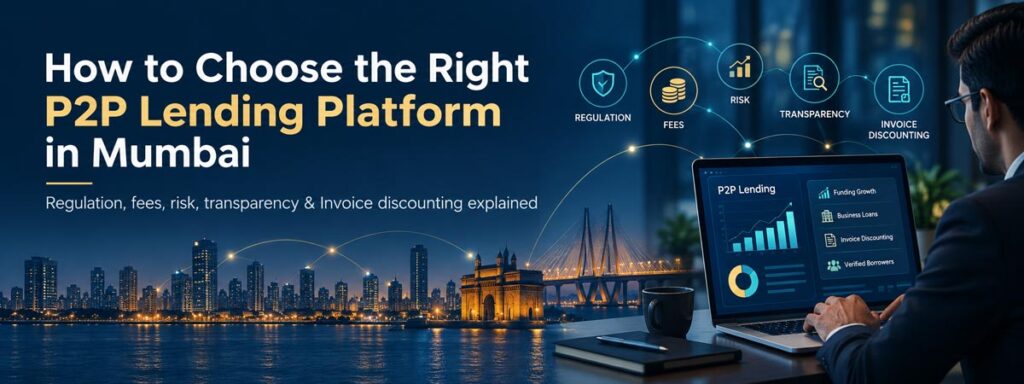
Finding the right P2P lending platform in Mumbai can feel confusing when you have several options to consider. Whether you want to explore lending opportunities or understand how peer-to-peer lending works, choosing a platform requires careful research.
A good platform should explain its business model, fees, risks and regulatory status clearly. It should also help users understand how money moves through the platform and what may happen if a borrower delays repayment.
In this guide, we explain what P2P lending means, what to check before choosing a platform and how to make a more informed decision. We also look at FlexiP2P and its focus on invoice discounting for businesses.
What Is a P2P Lending Platform?
A peer-to-peer (P2P) lending platform connects borrowers who need funds with lenders who are willing to provide them. Instead of relying only on traditional banks, participants can use a digital platform to explore lending opportunities.
For example, a business may need money to manage working capital while a lender may be interested in earning returns by lending money. A P2P platform can help facilitate this connection. However, lending carries risk. Borrowers may miss payments and lenders may lose money.
How Does P2P Lending Work?
- Registration: Users register and complete the required identity verification.
- Application or onboarding: Borrowers provide financial details while lenders complete the necessary checks.
- Credit assessment: The platform assesses borrowers and shares relevant risk information.
- Lending: Lenders review available opportunities and applicable terms before deciding.
- Repayment: Borrowers make repayments according to the agreed schedule.
The exact process depends on the platform and the type of financing it offers. In India, platforms operating under the regulated NBFC-P2P framework must follow the applicable Reserve Bank of India (RBI) directions.
Key takeaway: P2P lending provides another way to access financing opportunities, but it should not be treated as risk-free or guaranteed income.
1. Check the Platform’s Regulatory Status
One of the first things to check when choosing a P2P lending platform in Mumbai is its regulatory status. Companies operating as NBFC-P2P platforms in India must obtain the required RBI registration and follow applicable directions.
- Check the legal name of the company operating the platform.
- Verify its registration details against official RBI records.
- Read the terms and conditions to understand the platform’s role.
- Check whether the product is P2P lending, invoice discounting or another form of financing.
- Review risk disclosures and the grievance redressal process.
RBI registration does not guarantee returns or protect lenders from every loss. Invoice discounting and conventional P2P lending may also have different legal structures and regulatory requirements. Verify the rules that apply to the specific product.
2. Understand How the Platform Makes Money
A platform should explain its business model in simple language. It may earn through disclosed service fees, transaction charges or other sources. You should understand whether it connects participants or provides additional services such as credit assessment, document checks and repayment tracking.
- Who provides the funds and who receives them?
- How does the platform earn revenue?
- What checks happen before a transaction is listed?
- Who tracks repayments?
- What happens if a payment is late?
A clear business model helps you understand where your money goes and what risks you may be taking.
3. Compare Fees and Understand the Actual Cost
Fees can affect the cost of borrowing and the amount a lender receives. Depending on the product, charges may include processing fees, platform fees, transaction charges and applicable taxes. Borrowers should understand the total amount they will receive and repay. Lenders should check whether fees reduce the amount they may receive.
For example, if a business receives ₹98,000 after a ₹2,000 charge against an eligible invoice worth ₹1,00,000, it should understand why the difference applies and whether other charges are involved. This is an illustration, not a quoted FlexiP2P fee.
Compare the net cost or expected net return rather than relying only on headline figures.
4. Understand Credit Checks and Default Risks
Credit assessment helps users evaluate lending opportunities. Depending on the product, useful information may include a borrower’s financial profile, repayment history, existing obligations, credit assessment, loan amount and repayment schedule. For invoice discounting, it may also be important to assess invoice authenticity, the buyer’s payment history and the business’s financial information.
No credit assessment can guarantee repayment. Before committing funds, understand how overdue payments are handled, what updates the platform provides and what recovery steps may be available. Recovery is not guaranteed.
Good risk management starts with understanding how you could lose money, not just how much you might earn.
5. Look for Transparency and Clear Information
- Clear product descriptions and terms
- Applicable fees and risk disclosures
- Privacy and security policies
- Customer support details
- A complaint or grievance process
Read official documents instead of relying only on advertisements or testimonials. If something is unclear, ask the company for an explanation before signing up.
6. Check Technology and Security
Digital platforms can make registration and document submission more convenient, but security still matters. Review account access, privacy terms, identity verification and how personal or financial information is handled. Never share your password or one-time password with someone claiming to represent the platform.
7. Consider FlexiP2P for Invoice Discounting
FlexiP2P’s website describes a focus on invoice discounting for micro, small and medium enterprises (MSMEs). Invoice discounting allows a business to seek funds against eligible unpaid invoices, subject to the transaction structure and terms. This differs from assuming every opportunity is a conventional personal P2P loan.
Before using FlexiP2P, review its current website and documents for:
- The legal entity and regulatory framework applicable to the service
- Invoice eligibility requirements and transaction terms
- Fees and available invoice or buyer information
- The process for delayed payments
- Risks and the possibility of losing money
8. Compare Platforms Before Making a Decision
Factor | What to check |
Regulatory status | Verify the relevant registration or authorisation. |
Business model | Understand whether it offers P2P loans, invoice discounting or another product. |
Fees | Review all applicable charges. |
Risk assessment | Check what borrower or invoice information is available. |
Repayment process | Understand payment schedules and overdue procedures. |
Transparency | Read terms and risk disclosures. |
Security | Review privacy and account security policies. |
Customer support | Check contact details and complaint procedures. |
Conclusion
Choosing the right P2P lending platform in Mumbai requires more than comparing returns. Understand the company’s business model, verify the relevant regulatory status, compare fees and review the risks. FlexiP2P may be worth exploring if you are interested in invoice discounting for MSMEs. Read its published information and transaction terms to decide whether the model suits your needs.
FAQ
Check the company's legal identity, applicable regulatory status, business model, fees and risk disclosures. Understand repayment procedures before deciding.
P2P lending is permitted under India's applicable regulatory framework. Companies operating as NBFC-P2Ps must comply with relevant RBI directions. Verify the legal entity and product.
P2P lending carries risk. Borrowers may delay payments or default and lenders may lose some or all of the money lent.
P2P lending generally connects borrowers and lenders through a platform. Invoice discounting involves obtaining funds against eligible unpaid invoices. Their structures and rules may differ.
Review transaction details, fees, repayment schedules and risk disclosures. Do not rely on advertised returns alone.
FlexiP2P describes a focus on invoice discounting for MSMEs. Check its official website for current services, terms and eligibility.