What to Check Before Choosing a P2P Lending Company in Mumbai
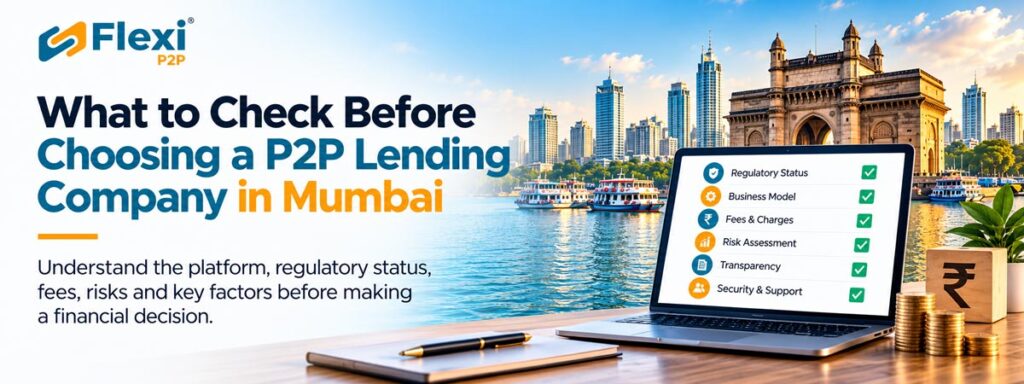
Choosing a P2P lending company in Mumbai requires more than comparing returns or signing up on a website. You need to understand how the platform works, what charges apply and what risks you may face before making a financial decision.
Whether you are exploring lending opportunities or looking for a platform that offers invoice-based financing, doing some basic checks can help you make a better choice.
Mumbai has a strong business and financial services ecosystem. With more financial services available online, users can explore different platforms without visiting an office. However, not every platform offers the same services and not every financial product follows the same rules.
1. Understand How P2P Lending Works
A peer-to-peer (P2P) lending platform connects borrowers who need money with lenders who are willing to lend. The platform helps facilitate the process through an online system. A borrower may need funds while a lender may be interested in receiving interest payments. The platform helps both sides connect, but lending carries risk. Borrowers may miss payments and lenders may lose money.
Before registering, check whether the platform offers conventional P2P loans, invoice discounting or another financial service. Understanding this difference helps you assess whether the product matches your needs.
Before choosing a financial platform, understand what it does, how it earns money and what risks you are taking.
2. Check the Company’s RBI Registration and Regulatory Status
Companies operating as Non-Banking Financial Company Peer-to-Peer Lending Platforms (NBFC-P2Ps) in India must obtain the required Certificate of Registration from the Reserve Bank of India (RBI) and comply with applicable directions.
- Check the legal name of the company operating the platform.
- Verify registration details against official RBI records.
- Read the terms and conditions to understand the platform’s role.
- Check the regulatory status of the specific financial product.
- Review risk disclosures and the complaint-handling process.
Flexip2p is one of the India first RBI license platforms; only few in India are listed as RBI License . Invoice discounting and conventional P2P lending may have different legal structures and regulatory requirements. Verify the rules that apply to the specific product.
Regulatory compliance and investment risk are two separate things.
3. Understand the Platform’s Business Model
Some platforms facilitate loans between individual borrowers and lenders. Others focus on business financing or invoice discounting, where a business seeks funds against an eligible unpaid invoice. For example, a supplier may deliver goods and raise an invoice with payment due after 60 days. If the supplier needs money sooner, invoice discounting may provide access to funds against the eligible receivable, subject to transaction terms.
- Does it offer personal loans, business loans or invoice discounting?
- Who provides the funds and who receives them?
- How does the platform earn revenue?
- What checks happen before a transaction is listed?
- Who tracks repayments?
- What happens if a payment is late?
A clear business model helps you understand where your money goes and what you can reasonably expect from the transaction.
4. Compare Fees and Other Charges
Fees can affect the total cost of borrowing and the returns available to lenders. Depending on the product, charges may include processing fees, platform fees, transaction charges and applicable taxes. Borrowers should understand the total amount they will receive and repay. Lenders should check whether fees reduce the amount they may receive.
For example, if a business receives ₹98,000 after a ₹2,000 charge against an eligible invoice worth ₹1,00,000, it should understand why the difference applies and whether other charges are involved. This is an illustration, not a quoted FlexiP2P fee.
Compare the net cost or expected net return rather than relying only on headline figures.
5. Check How the Platform Assesses Risk
Depending on the product, useful information may include the borrower’s financial profile, repayment history, existing obligations, credit assessment, loan amount and repayment schedule. For invoice discounting, the assessment may also involve checking invoice authenticity, the buyer’s payment history and the business’s financial information.
No credit assessment can guarantee repayment. Before committing funds, understand how overdue payments are handled, what updates the platform provides and what recovery steps may be available. Recovery is not guaranteed.
Good risk management starts with understanding how you could lose money, not just how much you might earn.
6. Look for Transparency and Customer Support
- Clear product information and terms
- Fee and risk disclosures
- Privacy and security policies
- Customer support details
- A complaint or grievance redressal process
You should know how to contact the company if you have a question about a transaction or a delayed payment. Read official documents and verify important information independently instead of relying only on promotional claims or online reviews.
A good financial decision starts with clear information, not just attractive numbers.
7. Check the Platform’s Technology and Security
Digital platforms can make registration, document submission and account management more convenient. Check whether the platform explains how personal and financial information is handled. Look for secure account access, clear privacy terms, a defined identity verification process and a way to report suspicious activity. Never share your password or one-time password with someone claiming to represent the platform.
8. Explore FlexiP2P’s Invoice Discounting Model
FlexiP2P describes itself as an invoice discounting platform focused on micro, small and medium enterprises (MSMEs). Its website explains how businesses can seek funding against eligible unpaid invoices and how lenders can review invoice-based opportunities through the platform.
This model differs from a conventional personal P2P loan, so understand the product before deciding whether it suits your requirements.
How Does FlexiP2P Work?
The general process described for the platform involves digital registration, KYC and invoice selection for lenders. Businesses can register, submit the required documents and apply for invoice discounting.
For lenders:
- Register and complete the required KYC.
- Review available invoice opportunities.
- Examine transaction information and expected yield details.
- Read the applicable terms and risk disclosures.
- Decide whether to participate based on your own assessment.
- Track the transaction and review payment updates.
For businesses:
- Register and provide the required business details.
- Submit the necessary financial documents.
- Apply using eligible unpaid invoices.
- Complete the platform’s review process.
- Review the transaction terms before proceeding.
The exact process, eligibility and timelines depend on the platform’s current policies and the specific transaction. Visit https://flexip2p.com/ to review current published information.
What Should You Verify Before Using FlexiP2P?
- The legal entity operating the service
- The regulatory framework applicable to the specific product
- Invoice eligibility requirements and transaction terms
- Fees and available invoice or buyer information
- The process for delayed payments
- Risks and the possibility of losing money
9. Compare Your Options Before Making a Decision
Factor | What to check |
Regulatory status | Verify the relevant registration or authorisation. |
Business model | Understand whether the platform offers P2P loans or invoice discounting. |
Fees | Check all applicable charges. |
Risk assessment | Understand what borrower or invoice information is available. |
Repayment process | Review payment schedules and overdue procedures. |
Transparency | Read the terms and risk disclosures. |
Security | Review privacy and account security policies. |
Customer support | Check contact details and complaint procedures. |
Conclusion
Choosing a P2P lending company in Mumbai requires careful research. Understand the platform’s business model, verify the relevant regulatory status, compare fees and review the risks. If you are exploring a peer to peer lending platform in Mumbai, focus on transparency and suitability rather than choosing based only on advertised returns.
FlexiP2P is worth exploring if you are interested in invoice discounting for MSMEs. Review its published information and transaction terms to understand whether its model matches your requirements.
FAQ
Check the company's legal identity, RBI registration status where applicable, business model, fees and risk disclosures. Understand how repayments work and what happens if a borrower defaults before choosing a platform.
Yes. P2P lending is permitted in India under the applicable regulatory framework. Platforms operating as NBFC-P2Ps must comply with the relevant Reserve Bank of India (RBI) directions. Always verify the company's registration details through official RBI records.
P2P lending involves financial risk. Borrowers may delay repayments or default and lenders may lose some or all of the money they lend. Review the available information, understand the risks and never assume that returns are guaranteed.
P2P lending connects borrowers and lenders through a platform. Invoice discounting allows a business to access funds against eligible unpaid invoices. The transaction structure, repayment process and applicable regulatory requirements may differ.
Review the transaction details, fees, repayment schedule and risk disclosures. Understand how overdue payments are handled and whether you can afford a potential loss. Do not choose a platform based only on its advertised returns.
FlexiP2P focuses on invoice discounting opportunities linked to MSME financing. It provides a platform where lenders can review available opportunities and their associated terms before deciding whether to participate. Lenders should carefully assess the risks and understand that returns are not guaranteed.
Before investing, check FlexiP2P's legal entity and the regulatory status applicable to its specific services. RBI registration as an NBFC-P2P is different from any other financial or regulatory authorisation. You can review the company's published information on the official FlexiP2P website and verify relevant registration details through official RBI records.
FlexiP2P's exact position among India's earliest RBI-registered platforms should be confirmed through verifiable registration records before making this claim. The RBI maintains official records of regulated entities. Readers should verify the company's legal name, registration category and registration details rather than relying only on marketing statements.